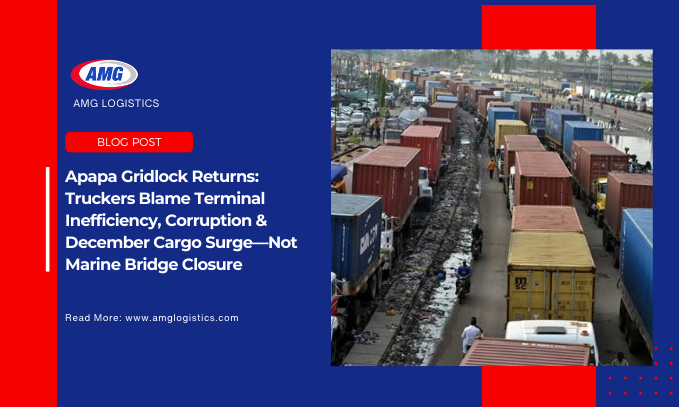
The notorious Apapa traffic gridlock has resurfaced—despite months of relative calm following improvements in the electronic call-up system. But maritime stakeholders say the renewed congestion has nothing to do with the closure of Marine Bridge or road infrastructure.
Instead, they point to a familiar trio of causes: terminal inefficiency, corruption within the port ecosystem, and the seasonal December cargo rush.
Stakeholders: “Marine Bridge Closure Is Not the Problem”
In conversations with Shipping Position Daily, truckers unanimously dismissed claims that the closure of the Marine Bridge is responsible for the gridlock.
According to Mr. Muhammed Sani Bala, Secretary General of the Association of Maritime Truck Owners (AMATO):
“The impact of Marine Bridge closure is minimal at best. The real issue is erratic terminal operations. Some terminals have been inactive for nearly two weeks. Others work for only a few hours and shut down without notice.”
He explained that inconsistent terminal operations increase cargo dwell time, disrupt truck scheduling, and create bottlenecks between pre-gates and the ports.
“No call-up system can function properly when terminals operate like this,” he added.
Corruption Allegations Disrupt Call-Up System Integrity
Beyond operational lapses, some stakeholders accuse port actors of manipulating the call-up system for personal gain.
A truck union leader—who requested anonymity—claimed that:
- Fake truck plate numbers are used to bypass the call-up queue
- Certain officials collude with favoured operators to fast-track their trucks
- Some terminals deliberately delay trucks to drive up “premium” access fees
- Trucks are diverted to private garages or re-routed to manipulate allocations
“The industry has been sold to those who want fast delivery at a premium,” he alleged. “Some officials stop trucks just to push prices up, worsening traffic.”
These practices, truckers say, undermine the credibility of the electronic call-up system and contribute significantly to the persistent congestion.
December Cargo Rush: The Seasonal Pressure Cooker
Badagry-based truck owner Kunle Ajayi pointed to another major—but predictable—driver: the annual December cargo surge.
“Once it’s December, traffic rises whether or not any construction is ongoing. The festive season alone brings volume spikes that stretch the system,” he said.
While terminal inefficiency and corruption intensify the problem, Ajayi noted that the yuletide rush naturally puts pressure on Apapa’s overstretched logistics systems, making gridlock almost inevitable unless authorities plan ahead.
A Systemic Problem That Requires Systemic Solutions
Stakeholders argue that resolving the Apapa gridlock requires more than road repairs or temporary traffic control. The real solutions lie in:
- ✔ Consistent and transparent terminal operations
- ✔ Proper monitoring and auditing of the electronic call-up system
- ✔ Elimination of corrupt access practices
- ✔ Seasonal planning for high-volume periods
- ✔ Stronger coordination among ports, terminals, security agencies and truck unions
Until these structural issues are addressed, truckers warn that Apapa will continue to oscillate between temporary relief and severe congestion—especially during peak seasons.
The return of the gridlock, they insist, is not an infrastructure problem. It is a process problem, worsened by human manipulation and predictable seasonal demand.