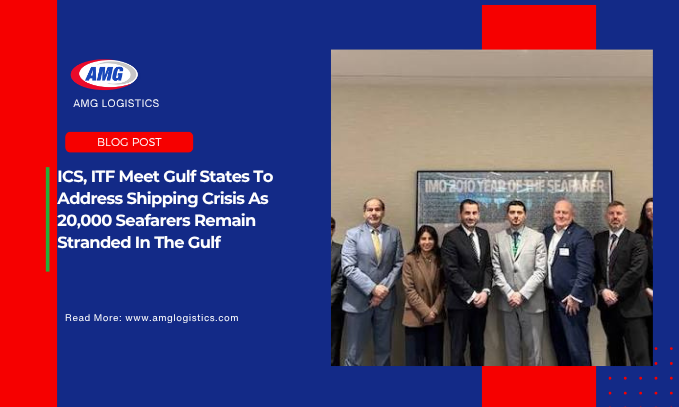
Global Shipping Crisis Deepens in the Gulf
The International Chamber of Shipping (ICS) and the International Transport Workers’ Federation (ITF) have held urgent talks with Gulf State representatives to address a worsening shipping crisis in the region.
The meeting comes four weeks into a deadly conflict that has severely disrupted maritime operations, leaving an estimated 20,000 seafarers stranded aboard vessels unable to transit the Strait of Hormuz.
Reports indicate that ships have come under attack, while seafarers face life-threatening conditions marked by fear, uncertainty, and limited access to essential supplies.
Key Measures to Support Stranded Seafarers
Discussions focused on immediate, practical solutions to protect seafarers and ensure continuity in global trade. Proposed initiatives include:
- Establishing a reporting system via the International Maritime Organization (IMO) to flag urgent resupply needs
- Recognizing seafarers as key workers under national laws to prioritize crew changes
- Enabling safe and rapid medical disembarkation for affected crew members
These measures aim to safeguard seafarers’ welfare while maintaining shipping operations in one of the world’s most critical oil and trade routes.
ICS: “Critical Steps to Safeguard Global Trade”
According to Thomas A. Kazakos, Secretary General of ICS, the meeting was both timely and constructive.
He emphasized that collaboration with Gulf States is essential to resolving the crisis and maintaining global supply chains.
“We have identified practical and achievable steps and are committed to working closely to safeguard seafarers and ensure the flow of global trade.”
ITF: “Seafarers Must Not Be Trapped in Conflict Zones”
Stephen Cotton, General Secretary of ITF, stressed the urgent humanitarian concerns facing maritime workers.
He highlighted that seafarers urgently need:
- Food and clean water
- Fuel supplies
- Access to medical care
Cotton also insisted that no seafarer should be forced to remain in a conflict zone against their will.
“Those who want to return home must be able to do so safely and without delay.”
Gulf States Promise Support and Logistics Assistance
Representatives from Gulf States reaffirmed their commitment to supporting stranded seafarers and maintaining maritime stability.
Key assurances include:
- Logistical support across GCC countries for ships unable to exit the Gulf
- Smooth crew change operations without major disruptions
- Emergency measures similar to those used during COVID-19 pandemic to handle expired contracts and certifications
Officials emphasized that the current phase of the conflict requires adaptive and coordinated responses.
Push for Safe Maritime Corridor in the Strait of Hormuz
Gulf representatives also called for closer collaboration with the IMO to establish a safe maritime corridor.
This initiative aims to:
- Enable the safe evacuation of vessels
- Protect seafarers and passengers
- Restore navigation through the Strait of Hormuz
Such efforts are considered critical to stabilizing global shipping routes and preventing further economic disruption.
Urgent Action Needed to Protect Seafarers and Trade
The ongoing Gulf shipping crisis highlights the vulnerability of global supply chains and the essential role of seafarers.
With 20,000 maritime workers still stranded, coordinated international action remains crucial to:
- Ensure their safety and welfare
- Restore shipping operations
- Maintain the flow of global trade