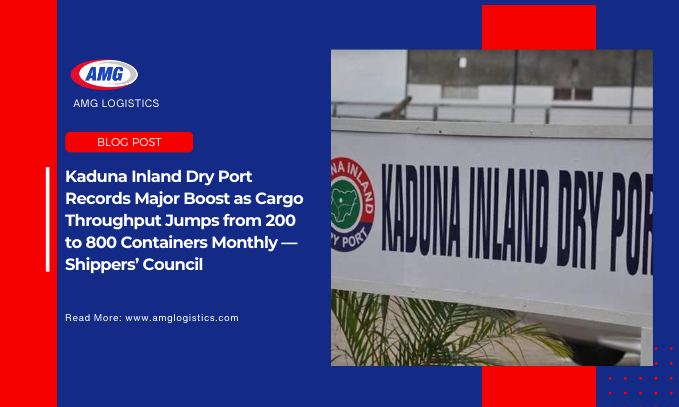
The Kaduna Inland Dry Port (KIDP) is experiencing a significant revival as monthly cargo throughput has surged from 200 to 800 containers, marking one of the most notable growth spurts since its establishment.
This was revealed by Danjuma Buba, Deputy Director at the Nigerian Shippers’ Council (NSC), Kaduna Port Office, during an interview on Monday in Kaduna.
Improved Coordination Fuels Port Growth
According to Buba, the impressive rise in activity is the direct result of improved coordination between the NSC and the Kaduna State Government, as well as targeted efforts to remove operational bottlenecks that previously hindered the port’s performance.
A major challenge had been the delays and interceptions of trucks moving containers to and from the dry port. But Buba said timely intervention helped restore smooth movement, giving trucks accelerated access for delivery and evacuation.
“Improved access encouraged more businesses and residents to patronise the port, and throughput has now exceeded 800 containers as of November,” he said.
This growth, he noted, has boosted trade and industrial activity across Kaduna and neighbouring towns.
State Government Support Strengthens Port Infrastructure
Buba highlighted the Kaduna State Government’s commitment to the dry port, particularly through its investment in constructing an access road that has significantly improved traffic flow.
He added that completing the second lane of that access road would further ease movement and sustain the dry port’s positive momentum.
Economic Gains: Higher Revenue & Expanded Business Opportunities
With the spike in cargo movement, both the state and Federal Government have recorded increased revenue through customs duties, levies, and other charges.
Local businesses have also seen rising opportunities, with improved purchasing power spreading across communities that rely on the port for trade.
Call to Businesses: ‘Use the Dry Port for Imports and Exports’
Buba urged Kaduna residents, traders and exporters to maximize the benefits of the inland dry port, stressing that it was created specifically to serve their commercial needs.
He emphasized that Kaduna has abundant export-ready commodities—including ginger, sesame seeds and beans—adding that KIDP offers competitive tariffs and export incentives that local producers should seize.
Agencies’ Collaboration Enhances Operational Efficiency
Similarly, Razak Salami, Port Manager of KIDP, confirmed the remarkable growth in throughput and credited it to strong support from the Shippers’ Council and effective collaboration with key agencies such as:
- Nigeria Customs Service
- Standards Organisation of Nigeria (SON)
- NAFDAC
- Other maritime and regulatory bodies
He said this synergy has strengthened compliance, improved cargo processing, and restored confidence among port users.
A Growing Inland Gateway
The Kaduna Inland Dry Port is steadily evolving into a major gateway for importers and exporters across Northern Nigeria. With improved infrastructure, smoother cargo movement, and stronger multi-agency cooperation, the facility is now better positioned to stimulate economic growth and deepen Nigeria’s non-oil trade.