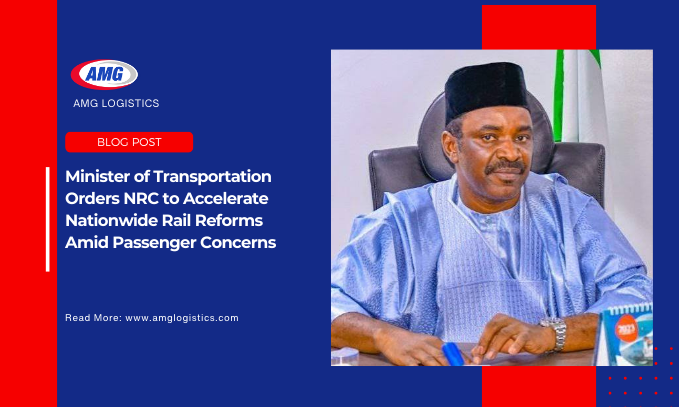
In response to growing public concerns over safety, service reliability, and operational gaps within Nigeria’s rail system, the Minister of Transportation, Mr. Said Alkali, has directed the Nigerian Railway Corporation (NRC) to intensify comprehensive reforms across the entire rail network.
The directive, announced in Abuja through a statement by Alkali’s Special Assistant on Media and Publicity, Mr. Alkali Jibril, marks one of the strongest pushes yet toward modernising the country’s rail operations and restoring public confidence.
Public Feedback Sparks Renewed Government Action
According to the Minister, recent weeks have seen an increase in passenger complaints shared through media reports, public forums, and community conversations. These concerns—ranging from service delays to safety lapses—offered what he described as “clear, insightful, and deeply valuable perspectives” on Nigerians’ daily rail experiences.
The Minister acknowledged the challenges openly, stressing that citizen feedback has become a powerful driver of reforms within the transportation sector.
“The concerns of passengers have given a deeply valuable perspective on the safety, reliability, and growth of Nigeria’s rail system,”
— Minister Said Alkali
Key Reform Actions Underway
Alkali confirmed that decisive steps have already been taken to strengthen rail operations. These include:
✔️ A Comprehensive Review of Safety Protocols
A full assessment of existing operational and safety frameworks to address resource gaps, outdated procedures, and vulnerabilities.
✔️ Stronger Monitoring and Accountability Measures
Enhanced oversight for both management and frontline staff to ensure better compliance and performance across all routes.
✔️ Improved Passenger Feedback Channels
New mechanisms for timely reporting, transparent updates, and more responsive communication between NRC and the public.
These actions, he said, are only the first phase of a long-term strategy to rebuild the rail system “in accordance with global best practices.”
Appreciation to Nigerians and the Media
The Minister extended gratitude to the media for what he described as responsible and constructive reporting, noting their role in amplifying citizen concerns and promoting transparency.
He also praised the patience and vigilance of passengers during what he called a “challenging period,” reaffirming that public criticism is a catalyst for meaningful improvement.
“Public vigilance strengthens governance and drives meaningful improvement,” he noted.
Furthermore, Alkali commended railway staff for their daily commitment to maintaining operations, assuring them of continued government support as reforms deepen.
A Renewed Commitment to a Safer, More Efficient Rail System
Alkali reaffirmed the Ministry’s unwavering dedication to transforming Nigeria’s rail infrastructure into a system that is safe, modern, and reliable for millions of commuters.
The government, he emphasized, will continue to prioritise:
- Safety modernization
- Efficient service delivery
- Transparent operations
- Continuous improvement
- Customer-centric reforms
As the reforms unfold, Nigerians can expect a more accountable and responsive NRC committed to delivering a rail system that reflects global best practices.
Conclusion
The Minister’s directive signals a turning point for Nigeria’s rail transportation sector. With public pressure mounting and safety concerns under scrutiny, the Ministry is accelerating a broad overhaul that could redefine the nation’s rail future.
If effectively implemented, these reforms could mark the beginning of a more secure, efficient, and trustworthy railway system—one that meets the expectations of citizens and supports national economic development.