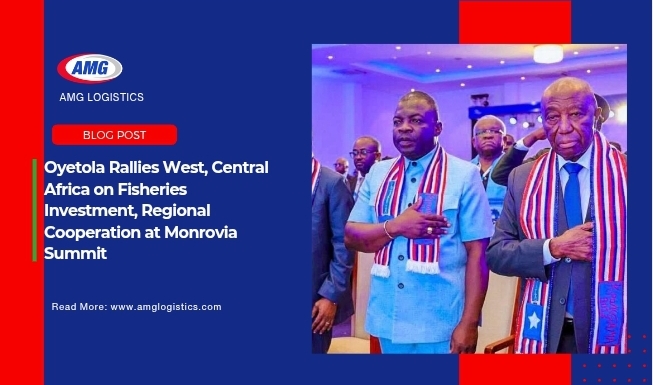
Nigeria is intensifying its push for regional collaboration and increased investment in fisheries as part of a broader strategy to unlock the economic potential of the blue economy, with the Minister of Marine and Blue Economy, Adegboyega Oyetola, leading the charge at a high-level summit in Monrovia.
Speaking at the National Fisheries Investment Conference held from March 30 to 31, 2026, Oyetola urged countries across West and Central Africa to deepen co-operation and channel more funding into the fisheries sector, describing it as critical to food security, employment, and economic growth. The event, declared open by Joseph Nyuma Boakai, brought together ministers responsible for fisheries and aquaculture from across the subregion.
Oyetola said the conference comes at a pivotal moment for the region, where millions rely on fisheries and aquaculture for their livelihoods, and fish remains one of the most accessible sources of protein. However, he warned that despite abundant marine and inland water resources, the sector continues to grapple with declining fish stocks, inadequate infrastructure, and limited access to financing and modern technology.
According to the minister, overcoming these challenges requires a strong commitment to sustainability, strategic investment, and closer regional alignment. He stressed that without proper management of oceans, rivers, and coastal ecosystems, long-term economic benefits would remain out of reach.
Highlighting Nigeria’s efforts, Oyetola noted that the administration of Bola Ahmed Tinubu is repositioning fisheries and aquaculture as key pillars of the country’s blue economy agenda. He pointed to policies aimed at boosting local production, reducing dependence on imports, and strengthening regulatory frameworks, adding that these reforms are already yielding positive outcomes, including sustained access to international markets for shrimp exports.
Beyond fisheries, the minister outlined broader interventions within Nigeria’s marine sector, including measures to curb marine pollution, upgrade port infrastructure, and enhance maritime security. He stated that the country’s recent record of zero piracy incidents in the Gulf of Guinea has significantly boosted investor confidence in the region.
On the investment front, Oyetola called for increased funding across the fisheries value chain, from aquaculture and processing to cold-chain logistics and export development. He emphasized that with the right policy environment, the sector has the potential to generate substantial employment opportunities, particularly for young people.
A major focus of his address was the need for stronger regional co-operation, especially in tackling illegal, unreported, and unregulated fishing, which continues to undermine sustainability efforts. He noted that because fish stocks traverse national boundaries, no single country can effectively address the problem alone.
In his capacity as Chairman of the Ministerial Committee of the Fisheries Committee for the West Central Gulf of Guinea (FCWC), Oyetola reaffirmed the body’s commitment to coordinated fisheries governance. He highlighted ongoing initiatives such as the development of a regional register of fishing vessels, joint maritime patrols, and enhanced information-sharing systems to strengthen enforcement.
He added that the FCWC is also working to harmonise fisheries policies among member states and promote intra-regional trade, with the aim of improving value chains and attracting greater investment into the sector.
The conference is expected to drive new commitments toward sustainable fisheries management and investment partnerships, as countries in the Gulf of Guinea region seek to harness the full potential of their marine resources while safeguarding them for future generations.