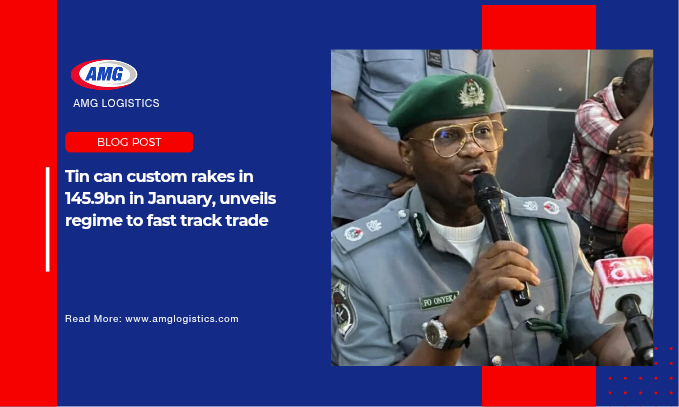
The Tin Can Island Command of the Nigeria Customs Service has generated ₦145.9 billion in revenue for January 2026 and announced plans to implement a full paperless cargo clearance regime, aimed at accelerating trade and enhancing transparency at the port.
The disclosure was made by the Customs Area Comptroller (CAC), Frank Onyeka, during a briefing with senior maritime journalists in Lagos, where he reviewed the command’s performance and outlined strategic priorities for the year.
Revenue Performance
- January 2026 revenue: ₦145.9 billion
- January 2025 revenue: ₦116.4 billion
- Revenue growth: nearly ₦30 billion increase
- Total 2025 revenue: ₦609 billion
Comptroller Onyeka attributed the improved revenue performance to:
- Teamwork among customs officers
- Strong collaboration with stakeholders
- Constructive engagement with the media
“Responsible reportage has helped the command fine-tune its operations,” Onyeka noted.
Paperless Cargo Clearance Regime
The paperless operations, scheduled to commence in Q2 2026, are designed to:
- Eliminate unnecessary physical contact in cargo processing
- Ensure faster clearance of goods
- Enhance transparency and operational efficiency
Under the new regime:
- Importers and agents will upload documentation electronically
- Properly declared and palletised consignments will move through scanners without physical examination
- High-risk consignments or cargo from watch-listed countries will undergo 100% physical examination for national security
On potential concerns about congestion or system circumvention, the CAC said compliance by stakeholders would ensure the system’s success and that any discrepancies would be promptly addressed.
He also acknowledged that occasional network downtime could affect operations but assured stakeholders that infrastructure improvements are ongoing to support seamless digital processing.
Strategic Focus
Comptroller Onyeka clarified that the command’s focus remains on collectible revenue rather than maximum revenue, ensuring traders retain sufficient capacity to run their businesses, meet logistics obligations, and maintain employment after paying duties.
He also credited the Comptroller-General of Customs, Bashir Adewale Adeniyi, for providing strategic direction and support for ongoing modernization reforms across commands.
Collaboration and Stakeholder Engagement
The Tin Can Island CAC pledged to:
- Deepen engagement with other government agencies at the port
- Reduce cargo dwell time
- Improve operational efficiency
- Maintain an open-door policy for stakeholders seeking clarification or redress
“We want to be known as trade enablers. I want to be known as a trade facilitator personified,” Onyeka declared.
Key Highlights
- Tin Can Island Command collected ₦145.9bn in January 2026
- Full paperless cargo clearance regime to commence in Q2 2026
- Enhanced transparency, faster cargo processing, and reduced physical contact
- Focus on collectible revenue to support sustainable trade
- Strengthened collaboration with other government agencies and stakeholders
- Ongoing infrastructure improvements to support digital operations
The initiative reflects the command’s commitment to facilitating legitimate trade, enhancing transparency, and contributing to national economic growth.